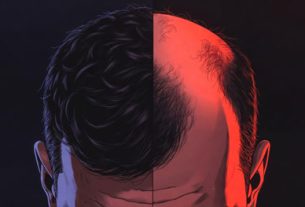
Temple recession is an early sign of hair thinning at the temples that gradually forms the classic M-shaped receding hairline, greatly affecting facial framing and perceived youthfulness.
Definition
Temple recession refers to the progressive loss of hair at the temples, resulting in a receding hairline that forms the classic M-shaped pattern. This occurs when hair thins and retreats symmetrically or asymmetrically at the sides of the forehead while the central frontal hairline remains relatively intact, creating a distinct “M” contour when viewed from the front.
Overview
Temple recession is a common early indicator of androgenetic alopecia, commonly referred to as male pattern hair loss, although it can occur in individuals of various genders and backgrounds. It is closely related to hairline recession and is frequently discussed in aesthetics and cosmetic dermatology contexts because it alters the way the hair frames the upper face. The pattern typically develops gradually due to the miniaturization of hair follicles in the temple regions, influenced by genetic factors and hormonal sensitivity. In facial aesthetics, changes to the temples are noted for their impact on perceived youthfulness, as a full, straight hairline contributes to balanced proportions between the forehead, eyes, and brows.
Key Characteristics
- Formation of an M-shaped hairline through bilateral recession at the temples, often creating deeper temporal angles.
- Gradual thinning and miniaturization of hair follicles in the affected areas, leading to finer, shorter hairs over time.
- Potential for symmetry or asymmetry, with one temple sometimes receding more noticeably than the other.
- Early onset possible in genetically predisposed individuals, commonly beginning in the late teens or twenties and progressing with age.
- Association with broader frontal hairline changes that can extend to other areas of the scalp if untreated.
Why This Term Is Connected to Aesthetic Maximization
In discussions centered on facial aesthetics and personal grooming, temple recession is recognized as a feature that can significantly influence the overall visual balance of the face. A youthful, well-defined hairline helps frame the eyes and forehead effectively, contributing to harmonious proportions. Changes in the temples may draw attention to the upper face and alter perceptions of age or vitality, making the maintenance or restoration of this area a frequent topic among those exploring ways to support a more balanced facial appearance through grooming, skincare routines, and informed lifestyle choices.
Related Facial Structures
Temple recession interacts directly with the frontal hairline and forehead proportions, potentially making the forehead appear larger or higher. It is anatomically linked to the temporal scalp regions and can influence how the eyebrows and brow ridge are visually emphasized. The condition also relates to overall craniofacial harmony, as hair density at the temples affects the framing of the eyes and midface. In broader aesthetics contexts, it is often considered alongside hairline recession patterns that encompass the entire frontal scalp.
Factors That Can Influence This Feature
Several factors can play a role in the development and progression of temple recession. Genetics is the primary contributor, particularly through inherited sensitivity of hair follicles to dihydrotestosterone (DHT). Age-related hormonal shifts, nutritional status, and general health also influence hair retention. Additional considerations include stress levels, certain medical conditions, medications, and even repetitive hairstyling practices that may cause traction on the hairline. Fat distribution, scalp circulation, muscle tone in the surrounding areas, and posture can indirectly affect scalp health and hair vitality.
Approaches People Sometimes Discuss
Online communities and forums sometimes explore non-invasive grooming and scalp care strategies for managing temple recession. These may include consistent use of over-the-counter topical treatments such as minoxidil solutions or foams applied to thinning areas. Some discussions reference consulting healthcare professionals regarding prescription medications like finasteride, noting that such options require medical evaluation and are not intended solely for cosmetic purposes. Lifestyle approaches, such as maintaining a nutrient-rich diet, managing stress, and adopting gentle hair care routines, are also commonly mentioned. In more advanced contexts, procedural options like hair transplantation are topics of conversation but are emphasized as requiring assessment by qualified specialists. All approaches are framed as individual choices best guided by professional advice.
Common Misconceptions
A frequent misconception is that temple recession only occurs in older adults, whereas it can begin at a relatively young age in those with genetic predisposition. Another myth suggests that over-the-counter products will deliver immediate or complete reversal of the pattern; in reality, any potential benefits typically require consistent, long-term application and vary widely by individual. Some assume all hair loss is irreversible or that drastic measures are always necessary, overlooking the value of early scalp care and professional evaluation to differentiate between genetic patterns and other causes. Unrealistic expectations about guaranteed outcomes can lead to disappointment, as hair growth cycles are slow and responses differ based on personal factors.
Interactive Poll
Quick Poll: Your Take
Have you noticed temple recession in your own hairline?
Tools and Products Sometimes Associated With This Topic
Disclosure: This article may contain affiliate links. As an Amazon Associate I earn from qualifying purchases. Product mentions are informational only and are not medical recommendations.
-
Men’s Rogaine 5% Minoxidil Foam
A topical foam commonly discussed in hair care routines for its potential role in supporting hair density in areas of thinning, including the temples and hairline.
View on Amazon -
Nizoral Anti-Dandruff Shampoo with 1% Ketoconazole
An antifungal shampoo sometimes incorporated into scalp maintenance regimens for its association with supporting overall scalp health in hair loss discussions.
View on Amazon -
FolliRoll Derma Roller with 540 Titanium Microneedles
A microneedling tool designed for scalp use that is occasionally referenced in grooming communities for its potential to stimulate circulation when part of a broader hair care routine.
View on Amazon -
Nature’s Bounty Biotin Hair, Skin and Nails Vitamins
A biotin supplement commonly discussed for general nutritional support of hair health as part of a balanced diet and wellness approach.
View on Amazon
Safety and Professional Considerations
Cosmetic procedures or treatments for hair concerns require evaluation by qualified healthcare professionals. Anatomy and responses to any regimen vary significantly among individuals, and results cannot be guaranteed. Finasteride is a prescription medication and may be classified as a controlled substance in some contexts; it is legally obtained only via a licensed healthcare professional and is not for cosmetic use unless medically approved. This article is for informational purposes only and should not be interpreted as medical advice.
Summary
Temple recession involves the receding of hair at the temples that creates the classic M-shaped hairline pattern, often linked to genetic and hormonal factors in androgenetic alopecia. It is a key consideration in aesthetics discussions due to its influence on facial framing and youthful appearance. While various grooming, topical, and lifestyle approaches are topics of conversation, professional guidance ensures safe and personalized management of this common feature.