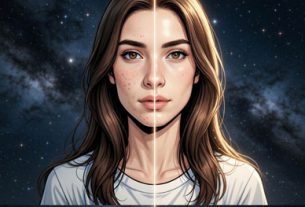
Explore the subtle uniform reduction in hair density known as diffuse thinning, an early indicator within hereditary hair loss patterns that impacts overall scalp health and facial framing in aesthetic grooming communities.
Definition
Diffuse thinning refers to a uniform decrease in hair density that occurs evenly throughout the scalp, rather than in localized patches or distinct recession lines. It is frequently associated with the early stages of androgenetic alopecia, commonly known as male pattern baldness. This form of hair loss can remain subtle at first, distinguishing it from more patterned forms of recession at the hairline or crown.
What Is Diffuse Thinning?
Diffuse thinning is a type of hair loss characterized by an even reduction in hair density across the scalp rather than isolated bald spots or receding patterns. It is often associated with early stages of androgen-related hair changes and can be more difficult to detect due to its uniform nature.
Overview
Diffuse thinning describes a progressive reduction in both the number and thickness of hairs across the entire scalp. In aesthetics and grooming discussions, it is often noted as an initial indicator within hereditary hair loss patterns, such as those mapped on the Norwood scale. The concept arises from observations in dermatological and cosmetic contexts, where hair follicles gradually miniaturize, producing finer strands over time. Unlike focal bald spots, this even distribution makes early detection more challenging yet relevant for those monitoring overall scalp health and facial framing as part of personal appearance optimization.
Early Signs and Detection
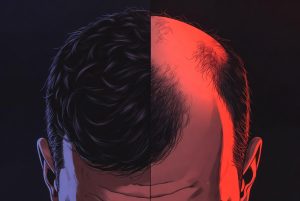
Diffuse thinning can be difficult to recognize in its early stages because the reduction in density occurs gradually and evenly. Common indicators include increased scalp visibility under bright lighting, reduced volume when styling, and a noticeable decrease in hair thickness when running fingers through the hair. Photographs, particularly from overhead angles, are often used to track subtle changes over time.
Key Characteristics
- Even reduction in hair density and diameter across frontal, mid-scalp, and vertex regions
- Subtle increase in scalp visibility without sharp boundaries or isolated bald areas
- Gradual progression that may align with advancing classifications of male hair loss patterns
- Potential for hairs to appear finer and less voluminous under various lighting or styling conditions
Why This Term Is Connected to Aesthetic Maximization
In communities focused on personal aesthetics and grooming, diffuse thinning is recognized as an early signal of changes in hair volume that can influence facial proportions and perceived youthfulness. Hair density contributes to the overall balance of head shape and hairline definition, which frames the face. Discussions often highlight the value of awareness around this uniform loss to maintain natural features before more pronounced shifts occur, integrating hair considerations into broader routines for symmetry and harmony.
Related Facial Structures
Diffuse thinning primarily involves the scalp but relates to surrounding facial anatomy through the hairline’s position, which borders the forehead and affects perceived facial width and height. Crown density influences the visible contour of the head from profile and overhead views. Anatomically, it concerns hair follicles distributed across scalp regions, where variations in structure and sensitivity can result in widespread rather than localized effects. These elements collectively shape how scalp hair interacts with facial features to support overall aesthetic proportions.
Factors That Can Influence This Feature
Genetics play a central role, determining susceptibility to hormonal effects on hair follicles. Aging contributes as natural hair growth cycles slow and follicles may produce thinner strands. Hormonal factors, including sensitivity to dihydrotestosterone, are commonly linked to gradual miniaturization. General health, nutritional balance, and stress levels that affect the hair growth cycle can also exert influence. While bone structure and posture may indirectly affect how density is perceived visually, they do not directly alter follicle behavior. Environmental elements and overall wellness further contextualize individual variations.
Approaches People Sometimes Discuss
Online forums and aesthetics communities sometimes explore general strategies for supporting scalp health, including over-the-counter topical applications, specialized cleansing products, and at-home tools for scalp stimulation. Conversations may reference consultations with qualified professionals regarding prescription options or in-clinic procedures such as platelet-rich plasma applications. Emphasis is typically placed on consistency, individual assessment, and integration with grooming habits. These topics remain subjects of personal discussion rather than standardized protocols, with participants noting variability in personal experiences.
Common Misconceptions
A frequent misconception is that diffuse thinning stems exclusively from temporary factors like diet or stress and will self-correct without attention. Others assume it always mirrors classic patterned recession from the outset, when uniform density changes can precede or occur independently. Some believe routine shampoos or basic care suffice to restore volume, underestimating the role of multiple influencing elements. Expectations of immediate visible transformation from any approach are also common, whereas changes in hair density generally unfold gradually.
Tools and Products Sometimes Associated With This Topic
Disclosure: This article may contain affiliate links. As an Amazon Associate I earn from qualifying purchases. Product mentions are informational only and are not medical recommendations.
-
Men’s Rogaine 5% Minoxidil Foam
A topical aerosol foam formulation containing minoxidil, frequently referenced in hair density discussions for supporting follicle activity on thinning areas.
View on Amazon -
Kirkland Signature Minoxidil 5% Topical Solution
An extra-strength liquid product often mentioned alongside other topical options in conversations about scalp hair maintenance.
View on Amazon -
Nizoral Anti-Dandruff Shampoo with 1% Ketoconazole
An antifungal shampoo commonly discussed for contributing to a balanced scalp environment in hair care contexts.
View on Amazon -
Titanium Microneedling Derma Roller (0.25mm)
A handheld tool with fine needles sometimes explored in community talks regarding scalp stimulation approaches.
View on Amazon
Safety and Professional Considerations
Cosmetic procedures and treatments for hair concerns require evaluation by qualified healthcare or dermatology professionals. Individual anatomy and responses vary widely, and results cannot be guaranteed. This article is provided for informational and educational purposes only and should not be interpreted as medical advice or a substitute for professional consultation.
Summary
Diffuse thinning involves an even reduction in hair density across the scalp, often linked to early hereditary patterns. Awareness of its characteristics, influencing factors, and related discussions supports informed approaches to hair maintenance within aesthetic contexts. Monitoring and professional guidance remain essential for personalized understanding.