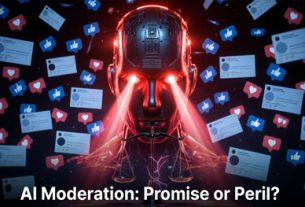
Exploring how the classic 1982 film Conan the Barbarian offers timeless insights into power, control, and the dangers of modern AI persuasion.
An Uneasy Echo from the Past
I didn’t understand the Riddle of Steel when I first saw Conan the Barbarian as a kid. I just knew it made me uneasy. James Earl Jones, eyes calm and voice like velvet over gravel, telling a chained Arnold Schwarzenegger that steel is nothing compared to the hand that wields it. Decades later, scrolling through feeds shaped by algorithms and watching people defend AI outputs like gospel, that same unease came roaring back.
I’ve watched that scene a dozen times since. Every time, the moment the cultist steps off the cliff (without hesitation, without doubt) hits harder. The movie stops being about swords and sorcery right there. It becomes about something far more disturbing: how easily people surrender themselves to someone who claims certainty.
The Riddle, Plain and Brutal
Conan’s father tells him to trust only steel. Thulsa Doom corrects him: steel is weak. Flesh is stronger. Not because bodies are tougher than blades, but because you can make flesh want to obey. He proves it with one quiet command, and a woman falls to her death smiling.
As a kid I thought Doom was just the bad guy being evil. As an adult, I see he’s stating a cold truth about power that every dictator, advertiser, and algorithm designer has understood ever since.
Key Parallels Between Steel and AI
- Steel Was the Ancient AI
Think about it. Steel changed everything. It let armies cut through bronze like paper, let farmers break tougher earth, let empires span continents. People fought wars over better forges, hoarded swords the way nations now hoard GPUs and datasets.
AI is our steel. We’re in the same frenzy, racing to build bigger models, scrape more data, believing whoever gets the sharpest blade wins. And just like in Conan’s world, we’re starting to realize the blade isn’t the point.
- The Part That Scares Me
What scares me isn’t that AI will become sentient and take over. What scares me is how easily it can become Thulsa Doom’s voice: smooth, confident, emotionally calibrated, without ever believing a word it says.
Feeds that keep us scrolling long past when we meant to stop. Recommendations that feel uncomfortably accurate, sometimes more so than the people who actually know us. Deepfakes that make lies look earnest. Persuasion at scale, personalized, relentless.
When I read some AI-generated post that thousands treat as profound insight, I hear Doom’s voice again: “Look at the strength in my hand.” And too often, we leap.
I have too. More than once.
- The Human Danger Already Here
I used to think the danger was technical: misaligned superintelligence, paperclip maximizers, sci-fi stuff. Now I think the danger is human, and it’s already here. We’re handing over our attention, our votes, our beliefs to systems controlled by people who understand the riddle very well and are very good at pretending they don’t.
The Hand That Wields It
Conan eventually kills Doom, but he never really answers the riddle. He just rejects the cult. Maybe that’s the only answer there ever is.
I’m not reassured when people say “AI is just a tool.” Steel was just a tool too. The question has never been the tool; it’s always been the hand holding it, and whether the rest of us are willing to kneel.
Looking at how quickly we already do, how eagerly we outsource judgment to black box models and charismatic tech prophets, I’m not convinced we’ve learned Conan’s lesson at all.
The riddle still stands. And right now, I’m not sure we’re on the right side of it.
Quick Poll: Your Take
Do you think we've learned the lesson from the Riddle of Steel in the age of AI?