The rating tiers system originated in internet forums and social media discussions focused on physical self-improvement and facial aesthetics. It serves as a simplified framework for assessing how an individual’s appearance is likely perceived in social, professional, and romantic contexts.
Definition
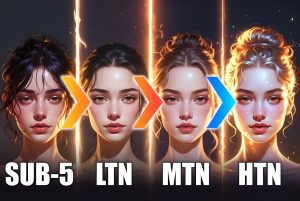
Attractiveness rating tiers: Sub-5 (below average), LTN (Low-Tier Normie), MTN (Mid-Tier Normie), and HTN (High-Tier Normie) are shorthand labels used in online aesthetics communities to describe an individual’s overall physical attractiveness level on a general 1–10 scale. Sub-5 refers to ratings below average, while the normie tiers categorize average-range appearances, with HTN representing the upper end of typical attractiveness. These terms provide a quick, community-specific way to communicate perceived sexual market value (SMV) without lengthy descriptions.

Overview
The rating tiers system originated in internet forums and social media discussions focused on physical self-improvement and facial aesthetics. It serves as a simplified framework for assessing how an individual’s appearance is likely perceived in social, professional, and romantic contexts. Rather than relying on subjective compliments or vague descriptions, the tiers offer an at-a-glance reference point that many participants use to track personal progress over time.
Sub-5 indicates below-average attractiveness, often associated with limited visibility in everyday interactions. LTN (Low-Tier Normie) describes someone who receives occasional positive attention but remains within average boundaries. MTN (Mid-Tier Normie) reflects a more balanced, decently perceived appearance that aligns with typical expectations. HTN (High-Tier Normie) approaches the upper limit of average attractiveness, sometimes overlapping with “Chadlite” territory in community slang, where noticeable improvements in treatment and opportunities may occur. The system is closely tied to the broader concept of “normie,” which refers to individuals of ordinary, non-exceptional attractiveness.
Participants in these discussions value the tiers for their honesty and motivational clarity. Crossing from one tier to the next is viewed as a measurable milestone that correlates with shifts in real-world social dynamics, though outcomes vary widely by individual circumstances, location, and cultural context.
Tier Rating Scale
Key Characteristics
- Sub-5
- LTN (Low-Tier Normie)
- MTN (Mid-Tier Normie)
- HTN (High-Tier Normie)
Why This Term Is Connected to Aesthetic Maximization
In online communities dedicated to aesthetic improvement, these tiers function as a practical benchmark for evaluating current status and setting incremental goals. The shorthand removes ambiguity from self-assessment conversations and encourages consistent tracking of changes in grooming, skincare, posture, and overall presentation. By providing clear categories, the system helps individuals focus on measurable steps rather than abstract ideals, fostering motivation through documented progress from lower to higher tiers. This framework is frequently referenced alongside related concepts such as “normie” to differentiate everyday attractiveness levels from exceptional or sub-average ones.
Related Facial Structures
Overall attractiveness ratings are influenced by the harmony and proportions of multiple facial features working together. Key anatomical elements include mandibular contour and projection, which contribute to lower-face definition; orbital region and eye spacing, affecting perceived expressiveness; nasal proportions and alignment; zygomatic prominence for mid-face structure; and overall facial symmetry and vertical proportions. Skin texture, hairline placement, and dental alignment also play supporting roles in how these structures are perceived collectively. The interplay between these elements determines how an individual’s face registers within the tier system, rather than any single feature in isolation.
Factors That Can Influence This Feature
Genetics establish the foundational bone structure, facial proportions, and growth patterns that largely determine baseline positioning within the tiers. Bone structure, fat distribution across facial compartments, and natural aging processes that affect skin elasticity and volume further shape appearance over time. Posture and spinal alignment influence perceived facial projection and neckline aesthetics, while muscle tone in both facial and postural muscles can enhance or diminish definition. General health factors including nutrition, sleep quality, and stress levels – impact skin clarity, hair condition, and overall vitality, all of which contribute to how an individual is rated in community discussions.
Approaches People Sometimes Discuss
Within online aesthetics forums, participants often share experiences with non-invasive daily practices aimed at supporting gradual improvements. Common topics include consistent grooming routines for facial hair and hairstyles, basic skincare regimens focused on cleansing, hydration, and sun protection, and exercises or devices intended to promote better posture alignment. Some discussions reference professional consultations with dermatologists or orthodontists for guidance on skin health or dental aesthetics. These conversations emphasize personal experimentation and long-term habits rather than quick fixes, with users noting that results depend heavily on individual starting points and consistency.
Common Misconceptions
One frequent misunderstanding is that these tiers represent an objective, universal standard. In reality, attractiveness perception varies significantly by cultural background, personal preferences, lighting conditions, and social context. Another misconception is that ratings are entirely fixed by genetics; while baseline features have strong hereditary components, lifestyle factors such as skincare consistency, posture habits, and overall health can produce visible shifts over months or years. Additionally, some assume higher tiers guarantee specific social or romantic outcomes. Community discussions often clarify that confidence, personality, and situational factors play substantial roles alongside physical presentation. Finally, the idea that the system applies equally to all demographics overlooks differences in age, gender presentation, and ethnic features that influence how ratings are interpreted.
Tools and Products Sometimes Associated With This Topic
Disclosure: This article may contain affiliate links. As an Amazon Associate I earn from qualifying purchases. Product mentions are informational only and are not medical recommendations.
-
CeraVe Moisturizing Cream
Commonly discussed in grooming routines for supporting skin hydration and barrier function, which can contribute to smoother facial appearance.
View on Amazon -
Philips Norelco Multigroom Series Trimmer
Frequently referenced for precise facial hair and hairstyle maintenance, helping achieve cleaner grooming lines that enhance overall presentation.
View on Amazon -
Crest 3D Whitestrips Professional Effects
Sometimes mentioned in discussions about smile enhancement, as brighter teeth can complement facial aesthetics in photographs and in-person interactions.
View on Amazon -
Rogaine 5% Minoxidil Foam for Men
Occasionally discussed in contexts of hair density and scalp coverage; this is an over-the-counter topical product and should be used according to label instructions after consulting a healthcare professional.
View on Amazon -
ORTONYX Comfort Posture Corrector
Referenced in posture-related threads for supporting spinal alignment and shoulder positioning, which can influence perceived facial projection and overall stance.
View on Amazon
Safety and Professional Considerations
Any cosmetic procedures or significant changes to appearance require evaluation by qualified healthcare or aesthetic professionals. Individual anatomy varies widely, and results cannot be guaranteed. Lifestyle adjustments such as skincare or posture work should be approached gradually and sustainably. This article is for informational and educational purposes only and should not be interpreted as medical, dermatological, or surgical advice.
Summary
Sub-5, LTN, MTN, and HTN provide a straightforward shorthand for discussing overall attractiveness levels within aesthetics-focused online communities. Rooted in practical self-assessment, these tiers help individuals understand their current positioning relative to average (“normie”) appearances and monitor progress through consistent grooming, skincare, posture awareness, and health practices. While useful as a reference tool, the system remains subjective and best viewed alongside broader factors such as personality and context. Approaching the tiers with realistic expectations supports informed, sustainable aesthetic journeys.
Quick Poll: Your Take
Do you find attractiveness rating tiers useful for self-improvement tracking?