The Norwood Scale offers a standardized visual chart for tracking hairline recession and crown thinning in male pattern baldness while guiding grooming routines and aesthetic balance discussions.
Definition
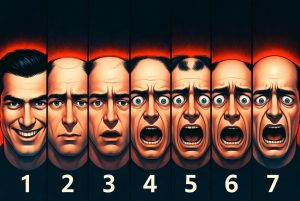
The Norwood Scale, also known as the Hamilton-Norwood Scale, is the standard 1–7 classification system used to identify and categorize the progressive stages of male pattern baldness, or androgenetic alopecia. It serves as a visual reference chart that maps hairline recession and crown thinning patterns. This tool assists in assessing the extent of hair loss and supports informed discussions about timing for various grooming or maintenance strategies.
Overview
The Norwood Scale was first developed by Dr. James Hamilton in the 1950s through observations of male hair loss patterns and was later revised and popularized by Dr. O’Tar Norwood in the 1970s. Today it remains the most widely recognized classification system in dermatology and hair restoration fields for describing androgenetic alopecia in men. The scale focuses on predictable patterns of recession at the temples and thinning at the vertex (crown), enabling consistent evaluation across individuals. In discussions about personal aesthetics and grooming, the Norwood Scale provides an objective benchmark for tracking changes that influence facial framing, forehead proportions, and overall appearance balance. It is frequently referenced because hair density and hairline position are key elements in how facial features are perceived.
Key Characteristics
- Stage 1: No significant hair loss or recession. The hairline remains in a youthful position with full coverage across the scalp.
- Stage 2: Mild recession at the temples, often forming a subtle M-shape. Many adults experience this as a normal mature hairline.
- Stage 2.5: Transitional stage where temple recession becomes more pronounced but does not yet reach the deeper recession associated with Norwood 3.
- Stage 3: Deeper recession at the temples creating a pronounced M, U, or V shape. This stage marks the first point where hair loss typically becomes noticeable to others.
- Stage 3 Vertex: Temple recession similar to Stage 2 or 3, accompanied by visible thinning or a small bald spot at the crown.
- Stage 4: Further frontal recession combined with a larger bald area on the crown. A band of hair still separates the two regions.
- Stage 5: Continued expansion of both frontal and crown areas, with the separating band of hair becoming noticeably narrower.
- Stage 6: The frontal recession and crown thinning merge into one larger bald region across the top of the scalp.
- Stage 7: The most advanced stage, leaving only a narrow horseshoe-shaped band of hair around the sides and back of the head.
Why This Term Is Connected to Aesthetic Maximization
In online communities and forums focused on personal grooming, self-improvement, and facial aesthetics, the Norwood Scale functions as a practical reference point for evaluating hairline position and overall scalp coverage. Awareness of one’s stage on the scale often informs timing of maintenance routines and helps frame conversations about preserving facial balance. Early recognition of changes is commonly highlighted because hairline recession can subtly alter the visual proportions of the forehead, eyes, and jawline, making the scale a useful tool in broader aesthetic planning discussions.
Factors That Can Influence This Feature
Progression along the Norwood Scale is driven mainly by genetic factors and the sensitivity of hair follicles to dihydrotestosterone (DHT), a hormone derived from testosterone. Additional influences include age, with noticeable changes often appearing between the late teens and 30s; hormonal variations; family history of hair loss; nutritional intake; stress levels; and general health status. Lifestyle elements such as diet quality, physical activity, and sleep patterns may support scalp health indirectly, although genetics remain the predominant factor in male pattern baldness development.
Approaches People Sometimes Discuss
In grooming and aesthetics-focused online communities, individuals often talk about non-invasive strategies such as strategic hairstyling to camouflage thinning areas, consistent scalp care routines, and the use of over-the-counter topical products. Some conversations reference consulting healthcare professionals regarding prescription medications or exploring procedural options like hair transplantation for advanced stages. Other topics include low-level laser devices and microneedling techniques for scalp maintenance. Discussions typically stress the value of consistency, early attention to changes, and the importance of individualized evaluation by qualified specialists, noting that outcomes vary widely among people.
Quick Interactive Poll
Quick Poll: Your Take
Do you track your hair loss using the Norwood Scale?
Common Misconceptions
A frequent myth is that every case of hair loss follows the exact Norwood pattern; other forms, including diffuse shedding from stress or medical conditions, may appear differently and can sometimes improve with targeted care. Another misconception suggests that wearing hats or regular shampooing accelerates baldness, a claim unsupported by evidence. Many also assume hair loss becomes completely irreversible the moment it begins, whereas many people successfully maintain existing hair through appropriate routines. The scale applies specifically to male-pattern progression; women typically experience different patterns classified by the Ludwig Scale. Finally, expectations of returning to a full youthful hairline are often unrealistic. Maintenance of existing density is more commonly achievable.
Tools and Products Sometimes Associated With This Topic
Disclosure: This article may contain affiliate links. As an Amazon Associate I earn from qualifying purchases. Product mentions are informational only and are not medical recommendations.
-
Rogaine 5% Minoxidil Foam
A topical foam commonly discussed in relation to supporting hair density and regrowth routines.
View on Amazon -
Kirkland Signature 5% Minoxidil Foam
A topical foam formulation often referenced as an accessible option in hair maintenance discussions.
View on Amazon -
Nizoral Anti-Dandruff Shampoo
An antifungal shampoo with 1% ketoconazole sometimes mentioned for supporting overall scalp health in hair care routines.
View on Amazon -
Toppik Hair Building Fibers
Keratin-based fibers commonly discussed for temporary cosmetic camouflage of thinning areas and visible scalp.
View on Amazon
Safety and Professional Considerations
Cosmetic procedures and treatments for hair loss require evaluation by qualified healthcare professionals. Individual anatomy, health conditions, and responses to approaches vary widely, and results cannot be guaranteed. This article is for informational purposes only and should not be interpreted as medical advice. Always consult a dermatologist or physician before starting any new regimen, especially with prescription medications or invasive options.
Summary
The Norwood Scale provides a standardized framework for understanding the stages of male pattern baldness, from early hairline changes to advanced progression. By offering clear visual stages, it supports informed conversations about grooming, scalp care, and aesthetic considerations. While genetics play the primary role, awareness of one’s position on the scale encourages proactive maintenance and professional guidance for managing changes effectively over time.