One platform has implemented strict rules against 24/7 drop farming streams, which often involve looping prerecorded content or displaying static screens to allow passive reward collection. In contrast, a rival platform recently introduced its first major Drops event for the game Rust on November 13, 2025, permitting numerous channels to operate continuously without similar restrictions. This difference highlights evolving strategies in managing viewer engagement and rewards.
Introduction
In the competitive landscape of live streaming platforms, Drops serve as a key incentive for viewership. Ingame rewards obtained by watching streams have led to ongoing debates about fairness, platform policies, and their impact on discoverability. One platform has implemented strict rules against 24/7 drop farming streams, which often involve looping prerecorded content or displaying static screens to allow passive reward collection. In contrast, a rival platform recently introduced its first major Drops event for the game Rust on November 13, 2025, permitting numerous channels to operate continuously without similar restrictions. This difference highlights evolving strategies in managing viewer engagement and rewards, echoing broader discussions on how Drops can distort platform health and fuel transactional raiding cultures.
Twitch’s Policies Against 24/7 Drop Streams
The policies against 24/7 drop streams originated around April 2020, coinciding with a popular game’s closed beta period. During this time, channels began using endless loops of footage or inactive screens to enable viewers to collect rewards without active participation. This prompted updates to community guidelines, prohibiting such practices to maintain the integrity of the rewards system.
Key elements of the restrictions include bans on using prerecorded videos, reruns, static images, or extended inactive periods for the purpose of drop farming. Brief pauses during live streams are permitted, but the primary intent must not be to facilitate passive farming. These rules were further strengthened by early 2024, focusing on preventing abuses that could distort viewership metrics and hinder discoverability.
The stated rationale emphasizes promoting genuine engagement and protecting the platform’s ecosystem from inflated viewer counts and automated exploitation, much like concerns raised in analyses of Drops as a form of inflated metrics.
Was the Reason to Restrict 24/7 Streams Really to Help Smaller Channels? Or More About Sharing the Ad Revenue Pot?
Officially, the restrictions aim to foster a fair environment where authentic content creators can thrive without being overshadowed by automated or low effort channels. By curbing 24/7 farming, the platform seeks to ensure that viewership reflects real interest, potentially benefiting smaller channels that produce live, interactive content.
This is speculative and not confirmed by Twitch, but an alternative perspective ties these rules to advertising dynamics. Ad revenue on streaming platforms is often linked to viewer engagement and watch time. Channels running nonstop with minimal interaction might attract passive viewers who do not engage with ads effectively, potentially lowering overall ad performance and revenue distribution. If fake or bot driven views dominate categories, it could dilute the value for advertisers, prompting the platform to enforce rules that encourage higher quality engagement. This might indirectly help spread ad revenue more evenly across active channels rather than concentrating it in farming operations. While no direct confirmation exists, trends in ad revenue challenges, such as significant drops reported in late 2024 and adjustments to viewbot policies in 2025, suggest that maintaining credible metrics for advertisers plays a role in such decisions.
Has Banning 24/7 Channels from Drops Worked Out?
From one viewpoint, the restrictions on 24/7 drop streams have not fully achieved their goals. Despite the bans, alternative methods have emerged that effectively mimic continuous operation. For instance, groups of streamers collaborate by redirecting viewers to each other through features like raiding, keeping audiences circulating within networks during drop events, a tactic that parallels the quid pro quo raiding dynamics increasingly common across platforms.
Additionally, many channels enter extended streaming modes, such as subathons, where they broadcast around the clock, including periods with minimal activity like sleep monitoring. These setups allow maximization of drop campaigns without technically violating rules against prerecorded content, but they still enable passive viewing for rewards. As a result, the ecosystem continues to see inflated participation during events, undermining the intent to prioritize genuine interaction.
Kick’s Rust Drops: An Unrestricted Approach
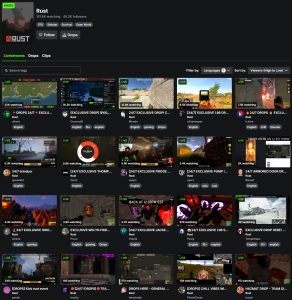
On November 13, 2025, a partnership introduced Drops for Rust on the rival platform, running through November 23. Participants link their accounts and watch eligible streams to earn ingame items, with progress tracked directly on the platform. As detailed in the initial coverage of Rust’s Drops tease on Kick, this marks a pivotal moment, bypassing Twitch’s traditional exclusivity clauses to offer fresh rewards.
Unlike the established rules elsewhere, there are no explicit prohibitions on 24/7 operations, AFK setups, or looped content. Channels can tag themselves as drops enabled, and viewers collect rewards from any qualifying live stream, one at a time.
This has led to a surge in the Rust category, with multiple channels promoting constant availability. The associated tournament event further boosts visibility, encouraging extended broadcasts.
Are There Complaints About the 24/7 Setup on Kick?
As of November 14, 2025, the second day of the event, there appear to be no significant reports of dissatisfaction regarding the 24/7 drops channels based on community discussions. Discussions focus more on participation methods, such as watching muted streams passively, rather than criticisms of the unrestricted format. The lack of complaints suggests initial acceptance, with participants appreciating the flexibility for reward collection.
Another Point of View: Should 24/7 Channels Be Allowed for Gimmick Rewards?
An opposing perspective argues that if viewers prefer 24/7 channels solely for obtaining rewards, they should be permitted to do so. These users often treat drops as temporary incentives, similar to giveaways, engaging only for the benefit and disengaging afterward. Forcing them to switch between channels disrupts this convenience without necessarily fostering deeper interaction.
In this view, restricting such options limits user choice and may not convert gimmick driven viewers into loyal audiences anyway. Allowing unrestricted farming could align better with the transient nature of reward seeking behavior, potentially increasing overall platform activity during events without harming long term engagement.
Potential Implications: Fairness Versus Accessibility
The contrast between strict enforcement and open policies raises questions about the future of drops in streaming. Tight rules aim to safeguard quality and equity but may not eliminate workarounds, while lax approaches could drive short term growth at the risk of eventual abuse. As the Rust event progresses, it may reveal whether unrestricted drops lead to sustained benefits or prompt future adjustments, potentially reshaping the competitive landscape first hinted at by Rust’s announcement. The ongoing evolution will likely influence how platforms balance viewer incentives with creator support.